Thermal Imaging Camera
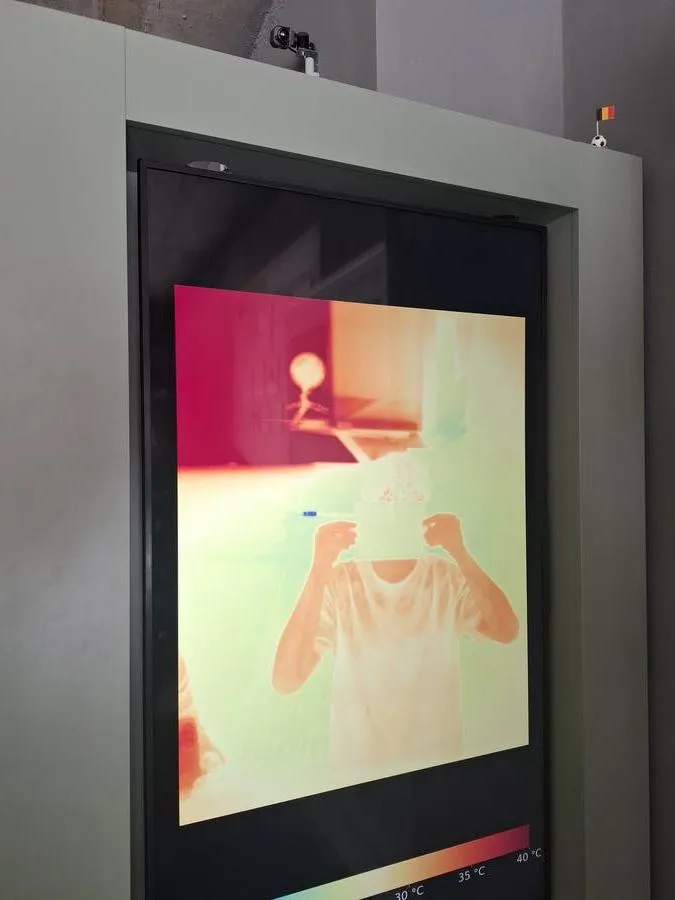
What does the world look like through heat?
The thermal imaging camera reveals temperature differences that our eyes cannot see. Discover warm hands, cold objects, and your own heat traces.
The Science Behind It
The thermal imaging camera measures infrared radiation, a form of light invisible to our eyes. All objects emit this thermal radiation, at different intensities depending on their temperature. The camera converts the radiation into visible colors. The colors do not necessarily represent the objects’ “actual” colors; they simply show temperature differences. Materials behave differently: some release heat quickly or conduct it well, while others retain it longer. That is why traces, such as a handprint or the cold stamp, remain visible for a short time. Glasses can also look different: glass blocks infrared radiation, while some plastics let some of it pass through. Thermal images are used in many fields, including medicine, building diagnostics, and agriculture. When installed in harvesting machinery, for example, they can detect young deer hiding in fields so the machine can be stopped and the animals can be protected from injury.