
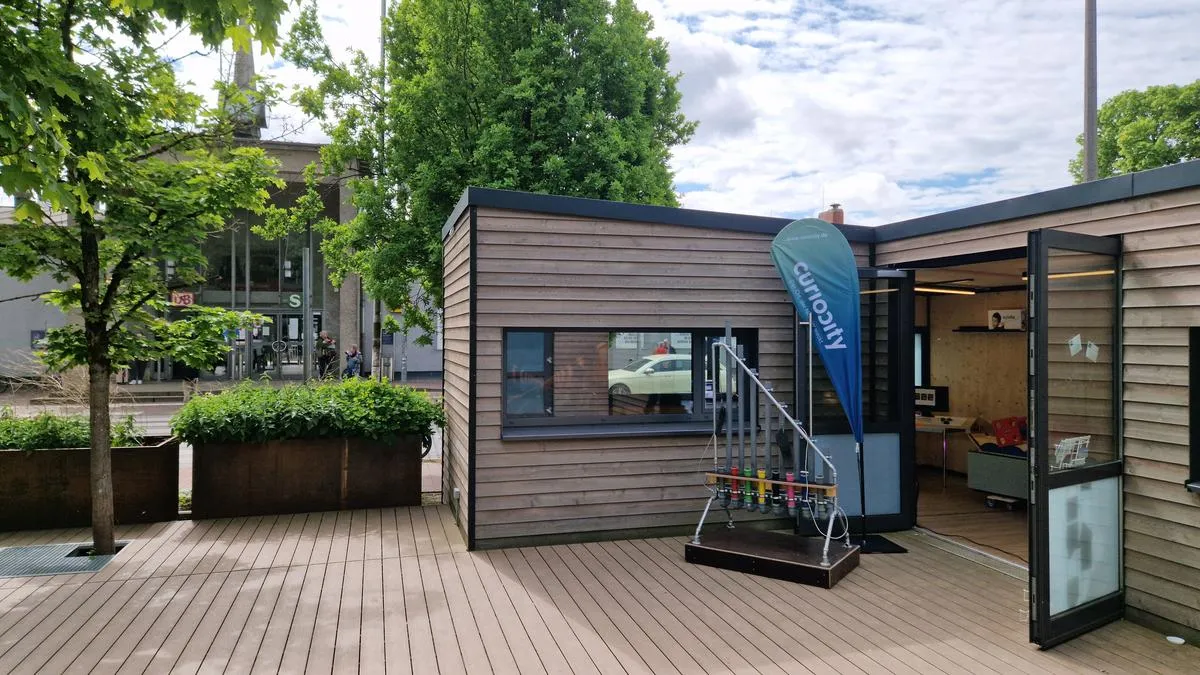
Experience technology. Discover the future.
Hands-on exhibits and workshops on robotics, AI, mathematics, acoustics, and climate change, right at Freising train station.
Made possible with Deutsche Bahn
Right at Freising train station, curiocity shows how science and railway technology work together in partnership with Deutsche Bahn AG—from robotic tunnel inspections to acoustic wheel diagnostics. DB supports the pavilion with space and expertise, making it a third independent location alongside the Science Center and MINT Garage.
Our volunteer team also helps run the pavilion, so it opens when staffing is available rather than continuously like the Science Center. Details are provided below under directions.
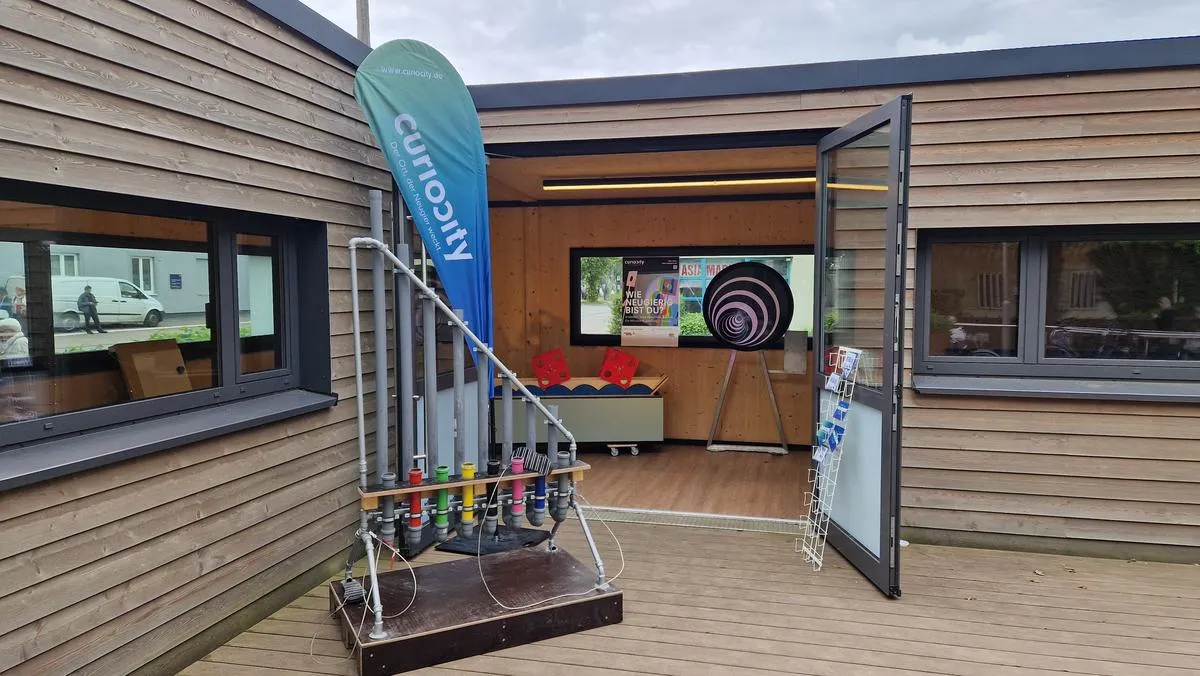
The Eye in the Tunnel
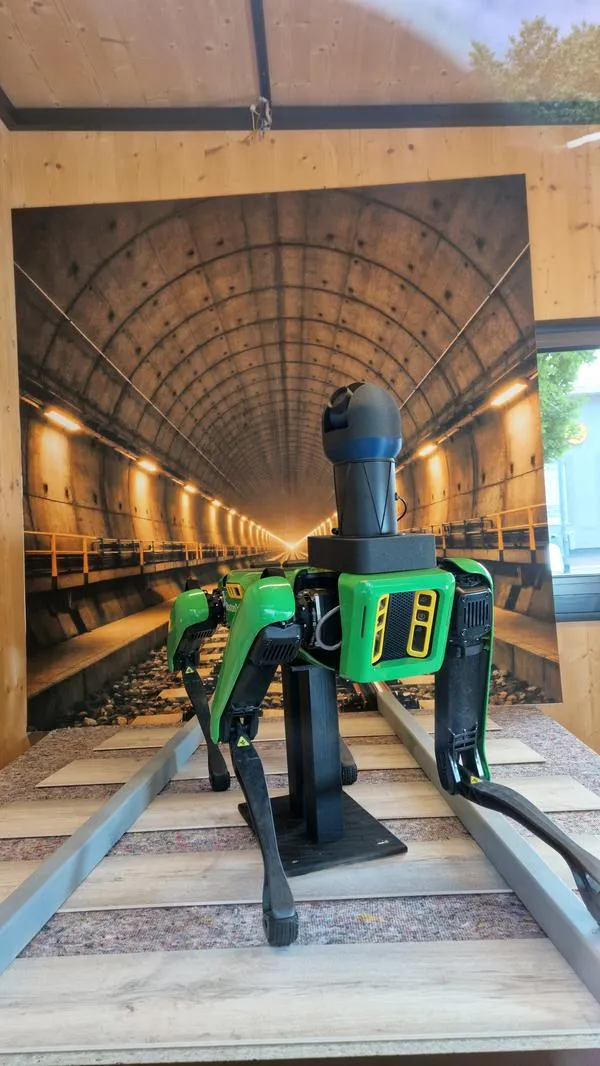
This exhibit shows what autonomous railway tunnel inspection of the future could look like: Boston Dynamics' four-legged robot dog Spot, fitted with a lidar sensor on its back, stands in front of an impressive tunnel backdrop. The laser captures the surroundings in 3D to the millimetre, creating complete digital maps of a tunnel.
The exhibit is a model and concept demonstrator, it illustrates how the technology works and its potential, without being drivable itself. An idea for the future, parts of which are already being tested.
🚆 Connection to Deutsche Bahn: Germany's rail network spans more than 33,000 km, including thousands of kilometres of tunnels that must be regularly and thoroughly inspected for damage, cracks and safety defects. Systems like Spot with lidar could make these inspections faster, safer and cheaper in the future.
Touch, Explore & Be Amazed
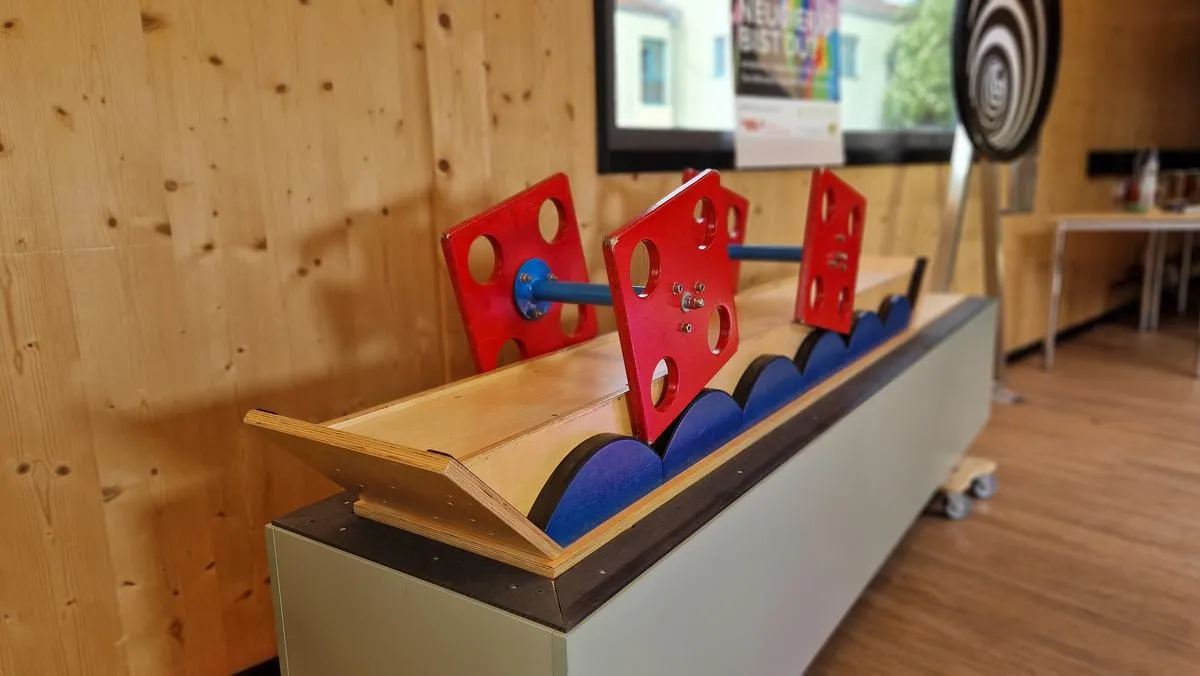
Unround Wheels
They really do roll! Squares, pentagons, and hexagons roll remarkably smoothly along a specially wavy track. The center of gravity always stays at exactly the same height. Pure mathematics meets engineering—and surprises at first glance.
🚆 Connection to Deutsche Bahn: Train wheels must be precisely round. Any irregularity causes vibration, noise, and wear, and can become a safety hazard at high speeds. Regular laser and ultrasound measurements are therefore essential to railway safety.
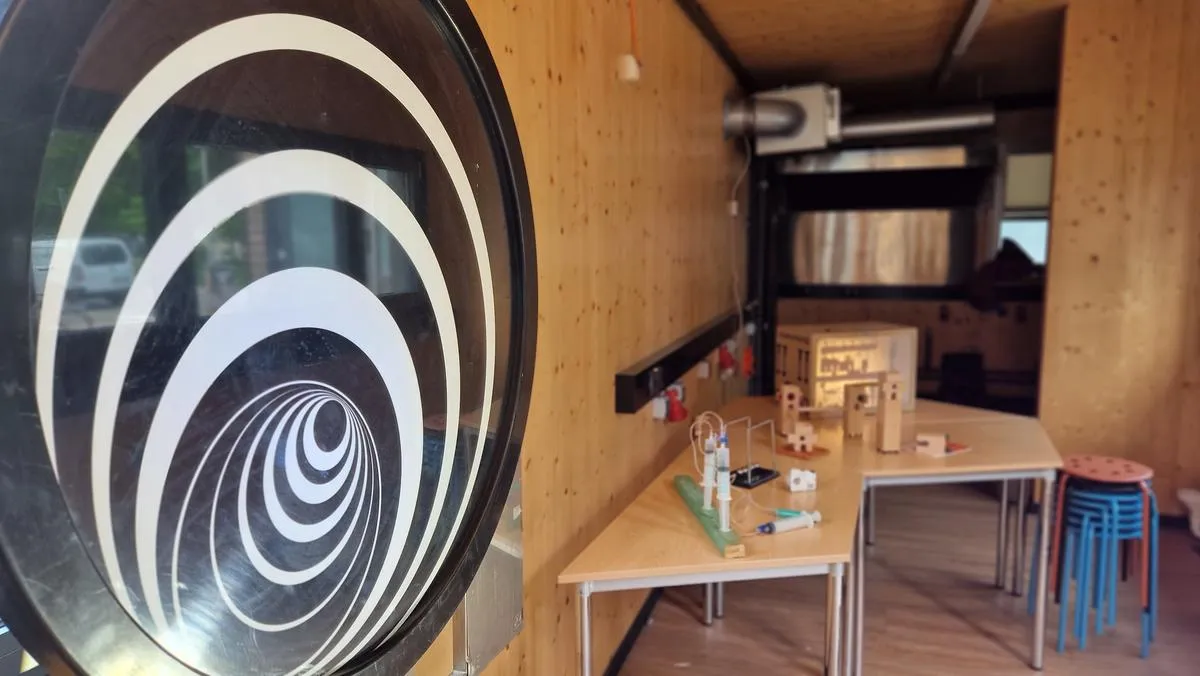
Waterfall Effect
Look at a rotating spiral disk, then look away: a stationary object appears to move. Seeing happens not only in the eyes, but especially in the brain. Receptors adapted to motion create an afterimage that appears to move in the opposite direction.
🚆 Connection to Deutsche Bahn: AI-powered railway camera systems must see more reliably than the human eye: they detect obstacles on tracks, analyze video data, and respond around the clock without being susceptible to human visual illusions.
Try It Yourself
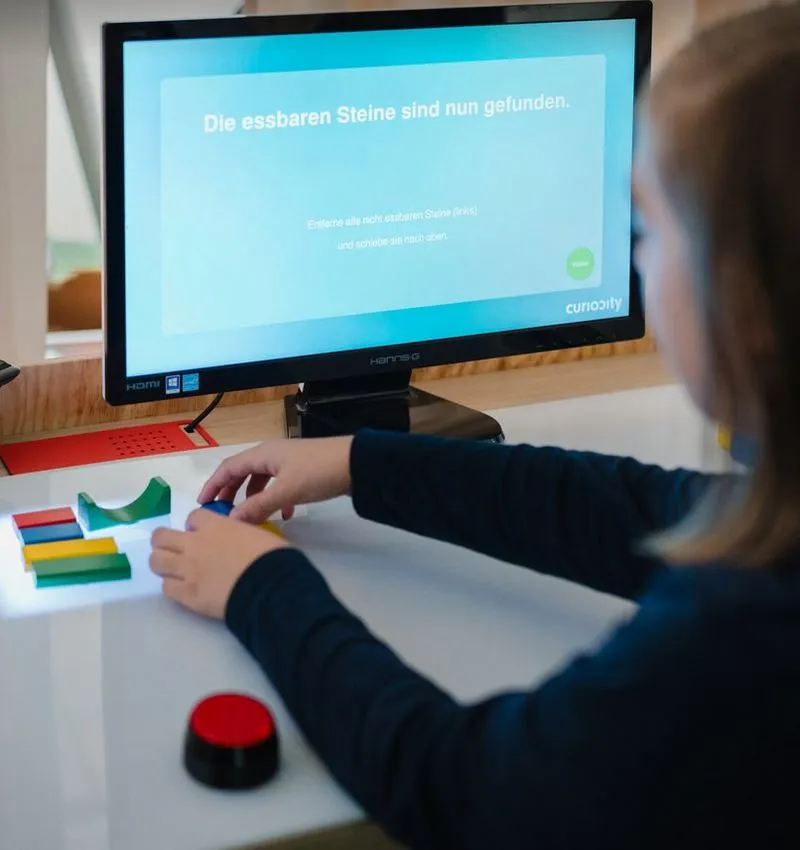
AI Station: You Are the Computer!
This time, we turn the tables: participants step into the role of an AI and experience how machine learning works. Step by step, they identify patterns using probabilities, just as an algorithm does.
🚆 Connection to Deutsche Bahn: AI systems help Deutsche Bahn optimize schedules, predict delays, perform predictive maintenance on switches, and analyze security camera footage.
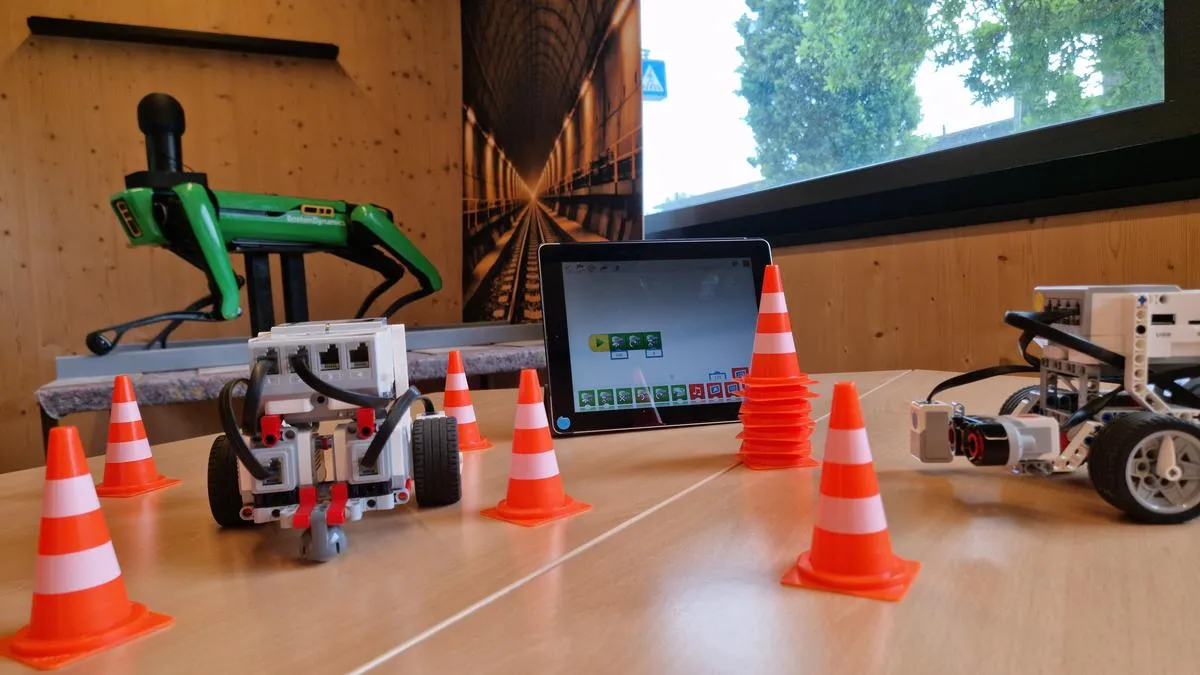
Programming with LEGO Mindstorms NXT
Using a course with cones and lines, participants program real robots to detect obstacles, follow lines, and solve tasks independently—with no prior knowledge and immediate results.
🚆 Connection to Deutsche Bahn: Automatic train control and autonomous driving, as used by the fully automated Hamburg S-Bahn, rely on the same sensor and programming logic concepts explored here through play.
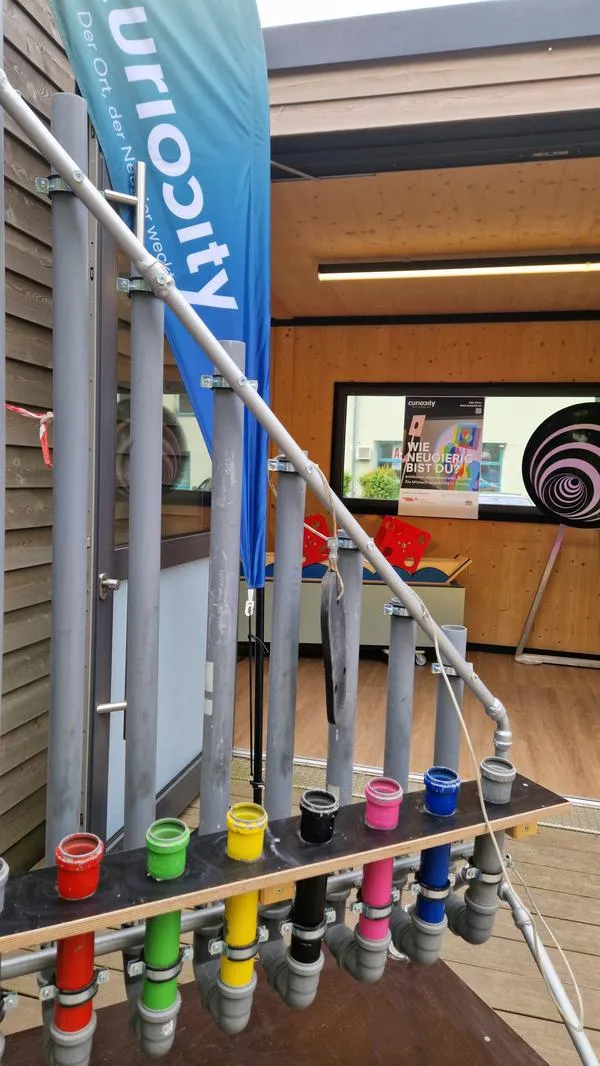
Pipe Organ Percussion
Hit colorful drainpipes with a flip-flop and music plays! Pipe length determines pitch: short pipes sound high, long ones low. It’s the same principle as a church organ, except the sound is produced by striking rather than airflow.
🚆 Connection to Deutsche Bahn: Railway acoustics includes noise measurements, sound barriers, and acoustic wheel diagnostics. Cracks and damage reveal themselves through changes in the sounds wheels make as they roll.
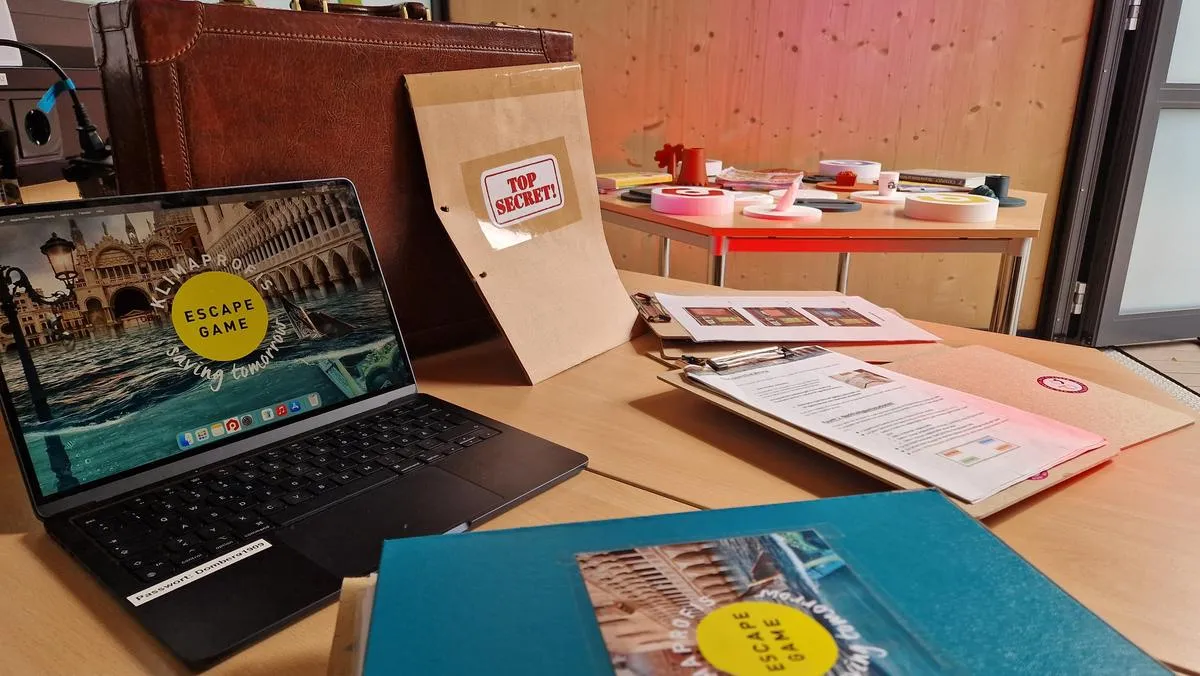
Climate Escape Game: Save Venice!
Can Venice be saved from a storm surge? With augmented reality, videos, puzzles, and real props, participants explore the connections behind climate change. Developed by HSWT and Domberg-Akademie.
🚆 Connection to Deutsche Bahn: Rail is the most climate-friendly form of mass transportation: about 30 times less CO₂ per passenger-kilometer than a car, making it a key part of the shift to sustainable mobility.
Right at the Train Station
Train
Easily reached by train, S1 stop Freising, the pavilion is right at the station.
On foot
No walking needed – the pavilion is located directly within the station area.