Monochrome Room
Where have all the colors gone?
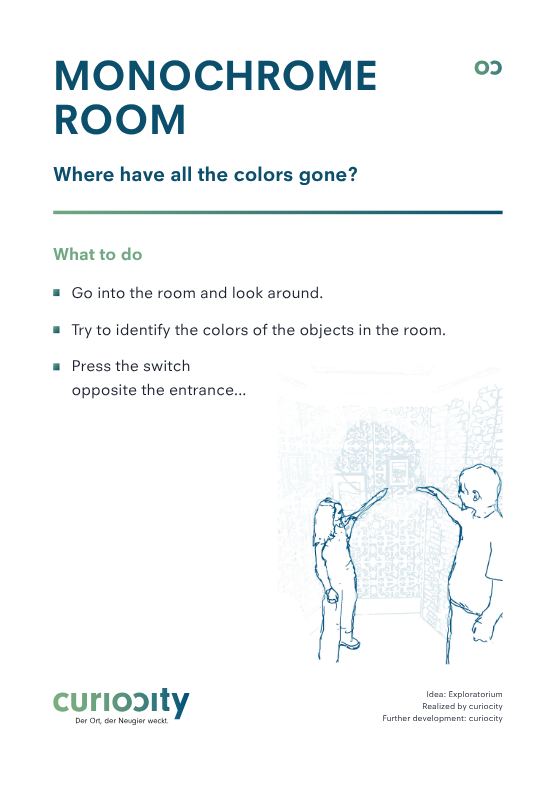
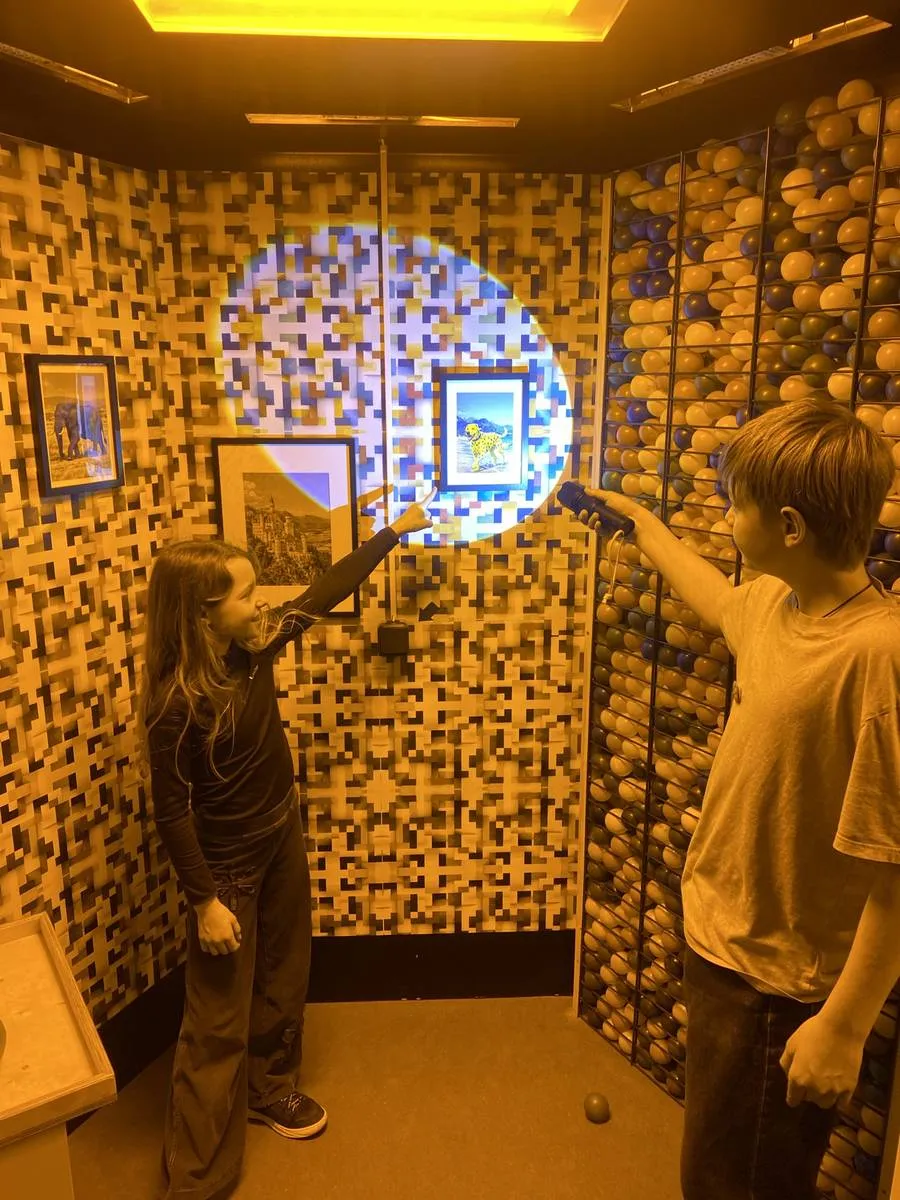
Single-color light changes how we perceive color. Objects lose their familiar colors and look completely different from what we expect.
The Science Behind It
The light in this room comes from a sodium-vapor lamp. It emits almost just one color of light at a very specific wavelength. This is called monochromatic light (“mono” means one, and “chroma” means color). Normal light contains many different wavelengths. Their combination makes colors visible: objects reflect certain parts of the light, and we perceive these as color. Here, that variety is missing. There is only one color of light, which is reflected similarly by all surfaces. As a result, your eyes cannot distinguish between them, and almost everything looks the same color or gray. Only when “white” light returns—that is, light containing many wavelengths—do the true colors become visible again. The room shows that colors arise from the interaction between light and objects.